





二氧化硅气凝胶由于其低导热率在隔热应用方面具有巨大的潜力。然而,它们通常具有较差的机械性能,需要在保持低热导率的同时增强机械性能。
近日,国防科技大学冯军宗副教授等人在Science China Materials发表研究论文,以商业化气相二氧化硅和甲基三甲氧基硅烷为硅源,并以水和乙醇为溶剂形成浆料。基于此,二氧化硅气凝胶块体(SAMs)可通过常压干燥进行制备,且无需额外的表面改性或溶剂置换。
本文要点
1) 制备的SAMs保持了典型的纳米孔结构,具有低密度(0.24 g cm−3)、低收缩率(4%)和低热导率(0.046 W m−1K−1)。
2) 通过辊压将浆料浸渍到纤维毡中,并通过浆料热固化和常压干燥制备出二氧化硅气凝胶毡(SABs)。
3) 制备的SABs具有良好的柔韧性和机械性能,便于安装和隔热应用,并显著减少了生产周期和成本。
4) 基于SAMs的纳米孔结构和低收缩率,通过调控遮光剂的粒径和质量分数进一步降低了SABs的高温热导率,优化后的SABs在800°C的热导率低至0.054 W m−1K−1。
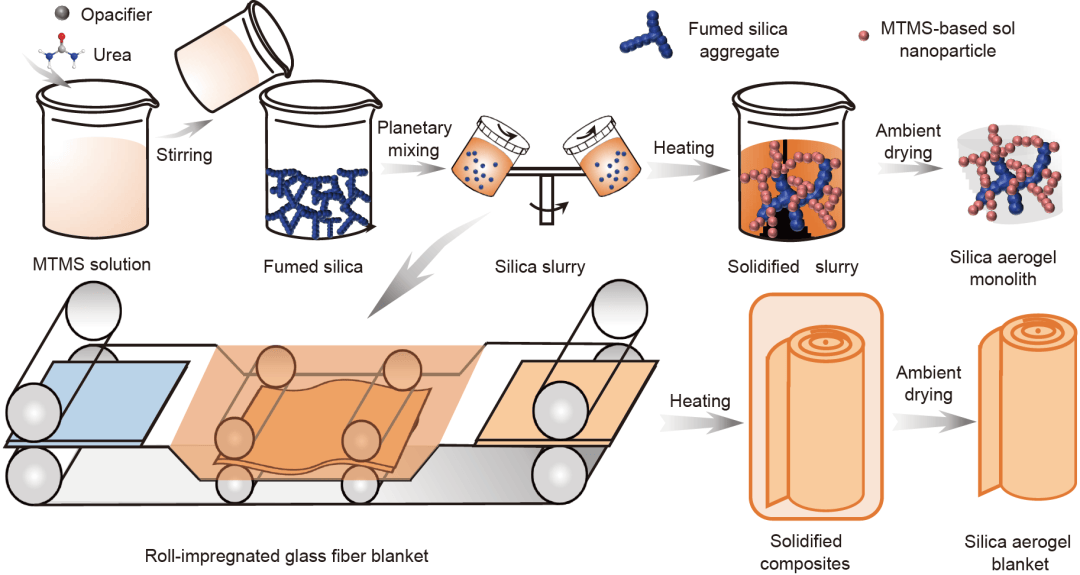
Figure 1.Schematic depicting the preparation process of SAMs and SABs using the slurry molding method.
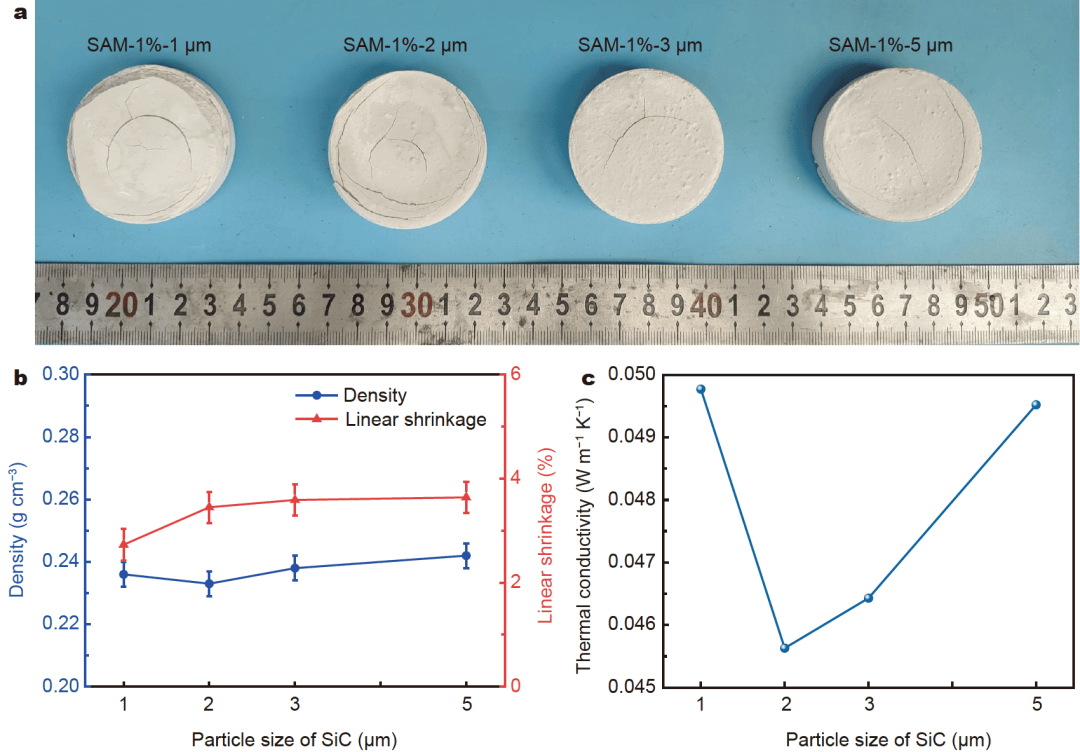
Figure 2.(a) Photographs, (b) density and linear shrinkage, and (c) room-temperature thermal conductivity values of SAMs obtained using SiC particles with different sizes.
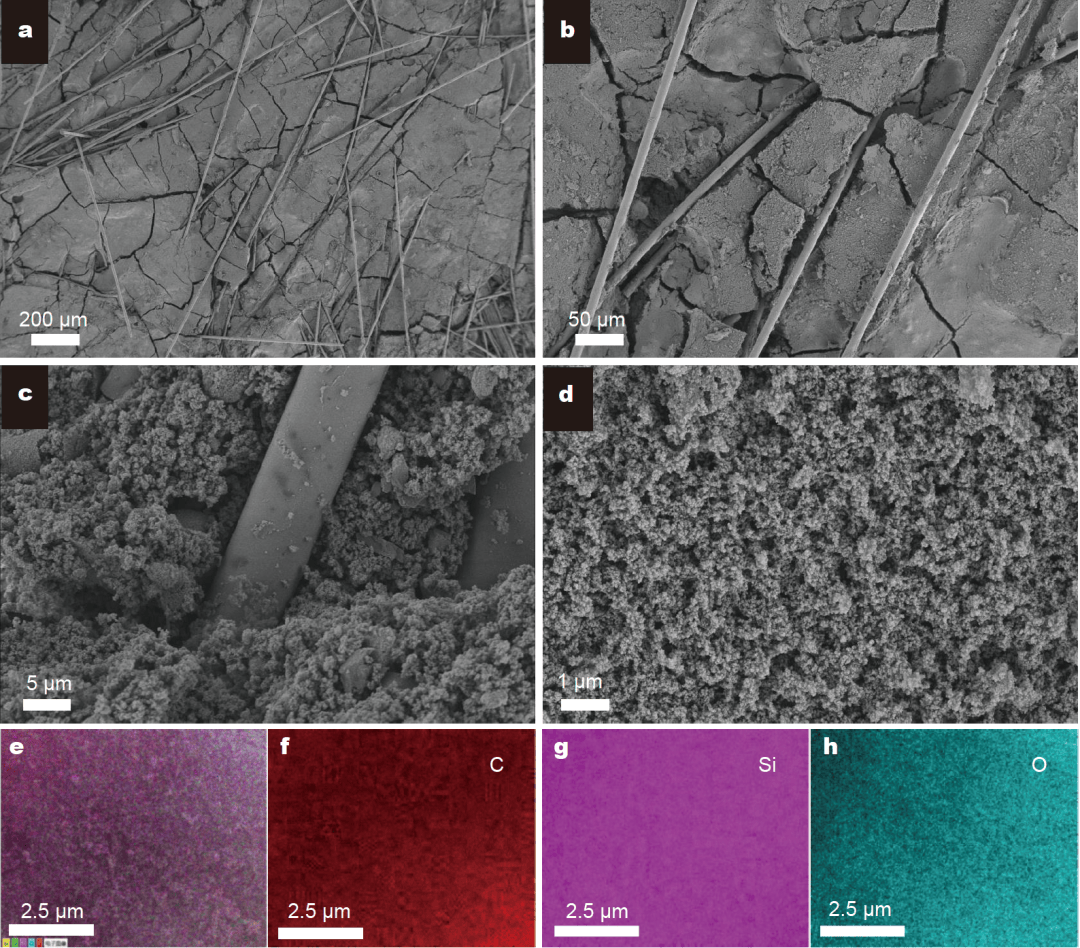
Figure 3.Microscale and nanoscale SAB morphologies. (a–d) SEM images of SABs. (e–h) Element distribution of the silica aerogel.
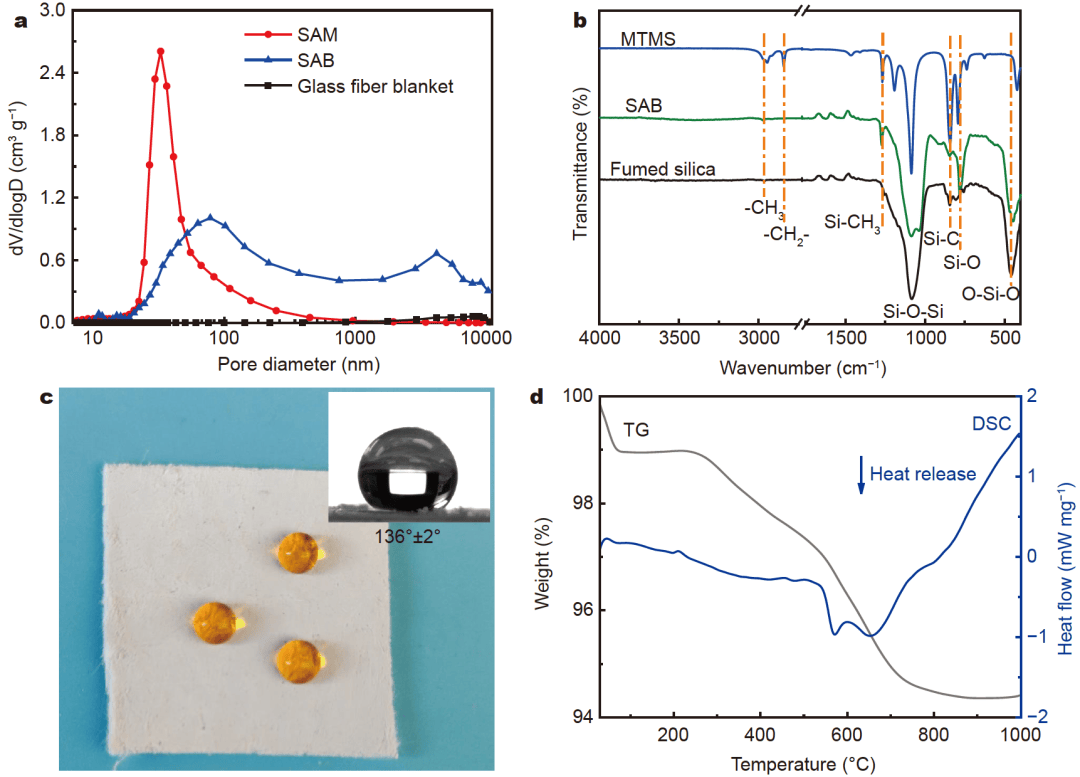
Figure 4.(a) Pore size distributions of SAM, SAB, and glass fiber blanket. (b) FTIR spectra of MTMS, SAB, and fumed silica. (c) Water contact angle of SAB. (d) TG-DSC curve of SAB.
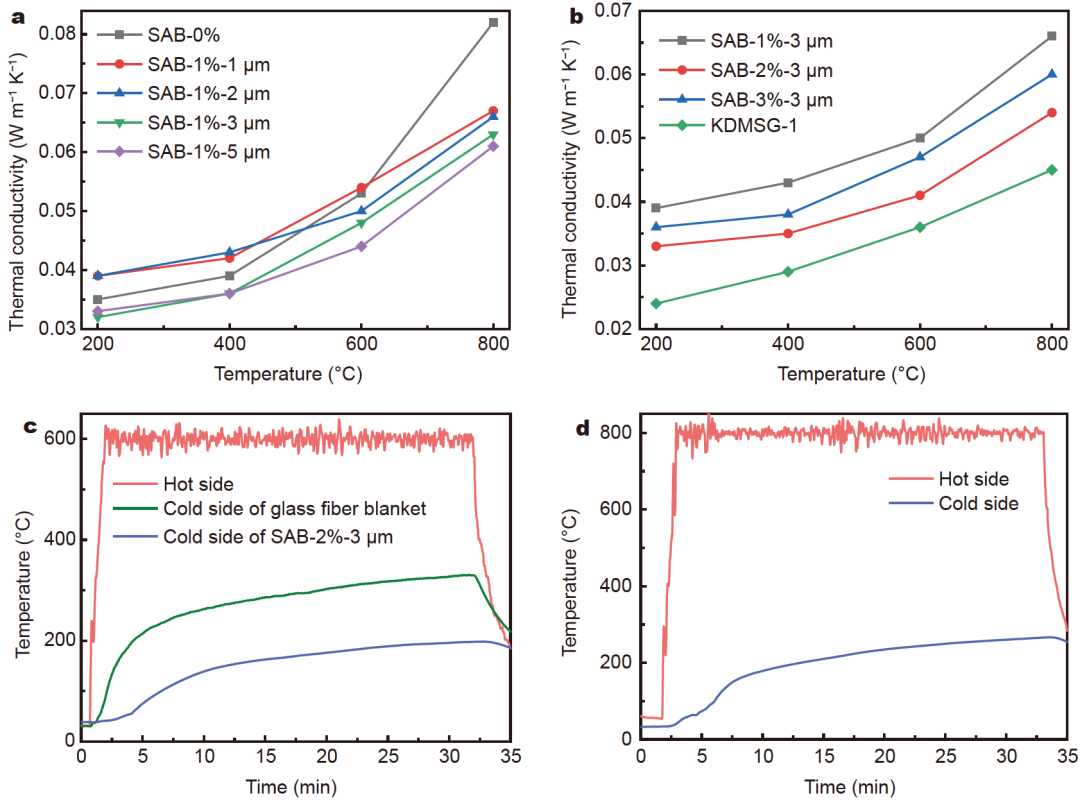
Figure 5.(a, b) High-temperature thermal conductivities of SABs with different (a) particle sizes and (b) contents of SiC opacifier. (c, d) Hot and cold side temperatures of the optimized SAB under a quartz lamp at (c) 600 and (d) 800°C.
文章信息
Shunyao Zhang, Lukai Wang, Junzong Feng, Yonggang Jiang, Liangjun Li, Yijie Hu, Jian Feng. Fabrication of flexible silica aerogel composite blankets from an aqueous fumed silica-based slurry. Sci. China Mater. (2024).
https://doi.org/10.1007/s40843-023-2787-5
免责声明:素材来源于网络,仅供学术交流,侵删。由于小编水平有限,文献解读如有疏漏、错误之处还请各位读者批评指正。如需投稿,请联系我们